Huey Tozoztli
«The Great Vigil»
What a veintena is
One of the eighteen twenty-day stretches of the Mexica solar year. Eighteen of them make 360 days; five more — the nemontemi — close the 365. This is a different count from the 260-day one that gives the day-signs, and the two run at the same time.
What this one asks of you
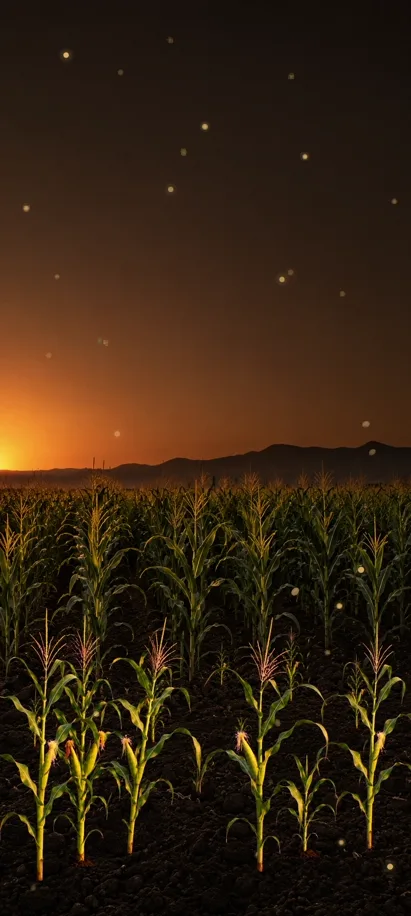
To tend the young maize and close the wait by putting the seed in the ground.
The energy it is dedicated to is Chicomecóatl and Cintéotl.
The full entry is in Spanish, and here is why
What you have read above is this project's own summary of the veintena of Huey Tozoztli. The full entry — the part that rests on the sixteenth-century sources — has not been translated, and that is a decision rather than an omission.
We chose not to touch the primary text. Those sections quote Sahagún, Durán and the codices in their own words, often in sixteenth-century Castilian. A quotation carried across stops being a quotation: it loses the register, the ambiguity and the exact wording someone might want to check against a facsimile.
In Spanish the entry carries:
- Etimología
- Energías
- Rituales
- Sociedad
- Simbolismo
- Códices
- Ecología
- Vigencia hoy
- Interpretaciones modernas
Read the full entry in the original Spanish → Nahuatl names and terms are identical in both versions.
Ecology
Empirical evidence: the Regmaíz Network (Guerrero, 2013–2020)
The Network of Peasant Guardians of Native Maize of Coyuca de Benítez applied milpa-system principles with local agroecology. Over seven years, yields went from 2 to 3.8 tonnes per hectare.
A farming that does not work against the environment, against life itself, that does not pollute, and that uses sustainable practices instead of agrochemicals.
Rituals
Literally cinteoanaloyan, «when the energy Cinteotl was taken». The whole community went out to the plots to gather a tender maize plant (toctli) or, failing that, a maguey root (mecoatl) — both living manifestations of the energy Cinteotl. They decked them with flowers and offered them tortillas, toasted maize mixed with beans, atoles and roasted frogs: a feast that was also a declaration of interdependence.
In the afternoon the plants standing for Cinteotl were carried to the Cinteopan, along with the grain set aside for sowing. Seven ears wrapped in red paper became the heart of the granary, and at sowing time it was their grain that was scattered.
How to cite this page
Alma Mexica, «Huey Tozoztli», The eighteen veintenas. Revised 2026-09-17. https://almamexica.org/en/veintena/huey-tozoztli/