
Alma Mexica
The Aztec calendar with its sources in plain sight. Five counts, none of them arbitrated.
8-Itzcuintli
Veintena of Xócotl Huetzi, trecena 1-Calli, following the Meza count. Today in all five counts.
Caso · Maya GMT · González Cortés · Casa Moctezuma · Meza
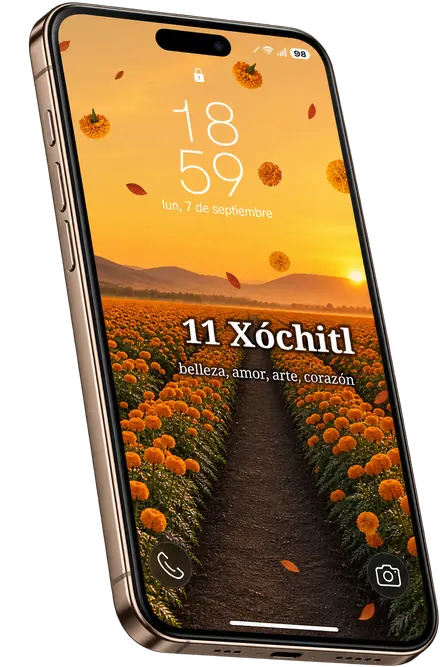
On the phone
The day, in Nahuatl, before you open anything
The tonal written over the background of its veintena, which moves through the twenty days it lasts. The Mexica clock and the day's reading on the home screen. And the sky of any night as seen from the Templo Mayor.
Everything on this site is in the app too, for free. What is paid for is what only exists on the phone.
The app's own text is in Spanish.
No ads · works offline · no user accounts · twenty full days on installing
What this is
A reference work on the Mexica calendar system, built from sixteenth-century sources, with the critical apparatus published in full: the source behind each claim, the algorithms with their checksums, and the disagreements the sources never resolved.
This is not a horoscope. Where the sources contradict each other, the contradiction is published instead of quietly settled. Where none of them says anything, the field is simply not there.
Five readings of the calendar are in circulation, and all five are here with their algorithm and their cited anchor. This work does not arbitrate between a living tradition and an academic reconstruction.
Most of the corpus — the twenty trecenas, the eighteen veintenas, the forty-five sacred energies — is in Spanish for now. What is here in English is the day, the calculator, and the part that no one else publishes in any language: the five algorithms, sealed and verifiable.
A note on one word. The English literature usually calls the figures who preside over the days deities, or, where it prefers to avoid the Christian framing, supernaturals. This site calls them sacred energies, and the reason is worth a sentence: the sixteenth-century chroniclers wrote dios, but the Nahuatl says teotl, which is neither the same word nor the same idea. That translation is where the foreign concept enters.
Last revised 2026-09-17.
How to cite this page
Alma Mexica, «Alma Mexica», En español. Revised 2026-09-17. https://almamexica.org/en/
Questions that reach this page
Who were the Aztecs or Mexica?
The people who founded Tenochtitlan in 1325 on an islet in Lake Texcoco and dominated much of central Mexico until 1521. They called themselves Mexica; «Aztec» is a name popularised in the nineteenth century, from Aztlán, the place their origin story says they came from. They spoke Nahuatl, and their calendar — two simultaneous counts of 260 and 365 days — is what this site publishes with its sources.